
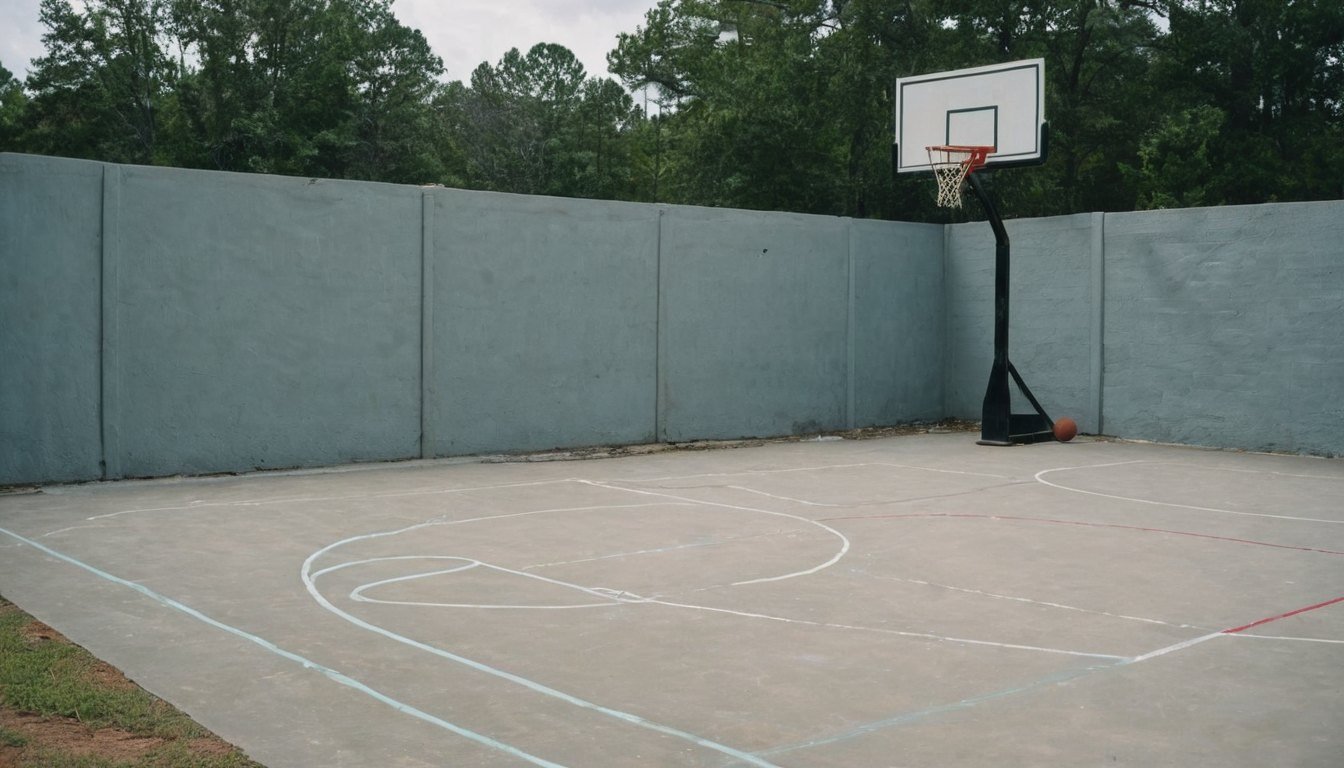
Fayetteville is a basketball town, with a lot of families who love to play. A court at home means shooting around after dinner, pickup games on weekends and a safe place for kids to practice. A concrete basketball court is the toughest way to build one.
Concrete Kings builds concrete basketball courts and sport pads around Fayetteville. We are locally owned, we have 5 years of experience, and we give free estimates, so you can see what your court would cost and what size fits your yard.
Sizes and layouts for a backyard concrete basketball court
A full size high school court is ninety four by fifty feet, which is far too big for most yards. Backyard courts come in smaller sizes. A half court is often twenty four by thirty feet or larger. A smaller pad near the garage can be twenty by twenty, which fits a hoop and a free throw spot.
We look at your lot and talk about the hoop type. A pole mounted hoop needs a footing set into the slab. A wall mounted hoop needs a pad close to the garage or house. We lay out the court with paint so you can see the size before we pour.
- Half court sizes for bigger yards
- Smaller sport pads near the garage
- Footing for a pole mounted hoop
- Room for a safe run out beyond the lines
How we build a concrete basketball court that plays right
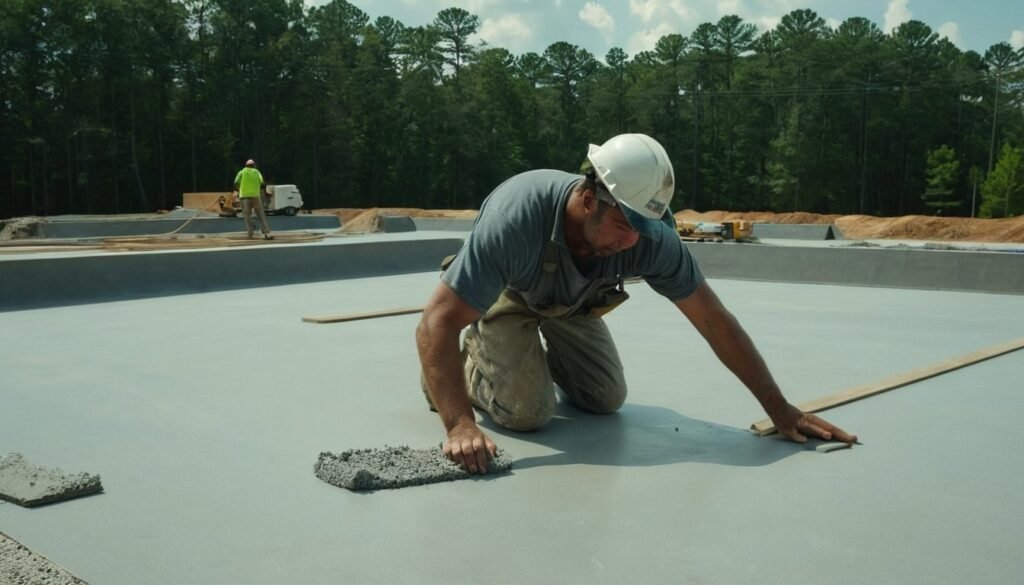
A court must be flat. Even a slight dip changes how the ball bounces. We grade the soil carefully, pack a base and set forms with a very gentle slope, just enough for rain to run off. The slab is usually four to five inches thick with steel for crack control.
The finish is important. A medium broom finish gives good grip, and a finer texture is easier on the ball. We cut joints so cracks stay out of the middle of play, and we cure the concrete slowly so the surface stays hard and dust free.
- Careful grading and a flat finish
- Four to five inch slab with steel
- Joint layout that avoids the play area
- A grip friendly finish that is easy on the ball
Court coatings, lines and the hoop
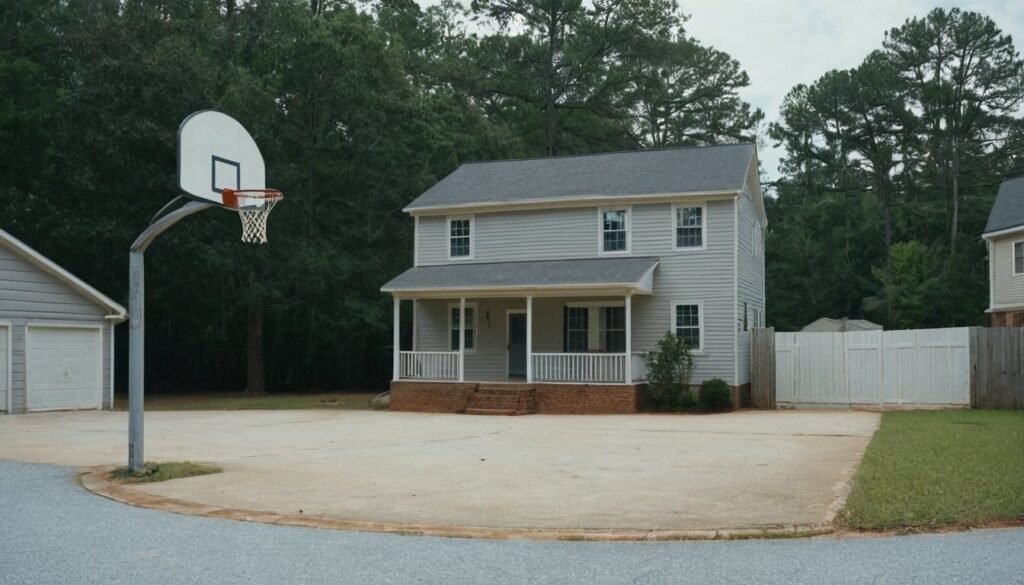
After the concrete cures, you can add a color coating and painted lines. A coat of acrylic court paint gives a nice color, and it cuts glare. Lines for the key, three point arc and free throw spot make it feel like a real court. We can set the hoop footing during the pour, and a pro can install the pole and backboard afterward.
Think about lighting, a fence or net to catch stray balls, and where water runs. In Fayetteville, summer sun is intense, so a lighter coating keeps the surface cooler.
Cost, timing and next steps
Price depends on the size of the court, the base work and the finish. A pad can be poured in one day, and it needs about a week before regular play and a month before the coating. We give a free estimate after we see the spot.
You may also want a smooth broom finish border or a sealer on the surface. Contact us through the contact page to schedule a visit.
Concrete Basketball Courts questions answered
How big should a backyard concrete basketball court be?
It depends on your lot and how you plan to play. A half court, with room for a full key and a three point line, is about twenty eight by thirty feet at a minimum, and thirty by fifty is a nice size. If you do not have that much room, a smaller pad of twenty by twenty feet still gives you a hoop, a free throw spot and room to dribble.
Beyond the lines, you need a safe run out zone of three to five feet, so players do not crash into a fence or a house. We mark your court with paint on the ground at the estimate, so you can stand in the space and see how it fits. It is easier to change a painted line than a poured slab. We then design the concrete basketball court to fit your family and your yard. If you are still choosing a hoop, send us a link. We can match the footing and the court layout to the exact model.
How flat does the surface need to be?
Very flat. A basketball court should have a slope of no more than one quarter inch per ten feet for drainage, and no humps or dips. If the surface has a low spot, water stands there, and the ball bounces off line. We use laser levels, string lines and a straight edge to check the grade as we set the forms.
A smooth, hard float and a fine broom finish give a flat texture that is good for dribbling and easy on shoes. Good joint layout keeps cracks away from the middle of play. After the pour, we check the surface with water, because puddles show low spots right away. We take extra care here, because a court that is almost flat is not good enough. Players notice, and it is hard to fix once the concrete is hard. Ask the kids where they like to shoot from. A thoughtful layout puts the court where they will really use it, and keeps balls out of the garden.
Can I put a hoop in the concrete?
Yes. Pole mounted hoops need a footing, which is a concrete block with steel anchors or a pole sleeve, set into the ground. We can pour the footing as part of the slab, or as a separate pad. We follow the hoop maker's directions for depth and size, and we leave a clean spot for the pole.
If you want a wall mounted hoop on your garage or a post mounted hoop on the edge of the driveway, we can plan that too. For bigger hoops with portable bases, a flat slab alone is fine. Tell us which hoop you plan to buy, and send the manual, so we can match the details. It is much easier to set the footing during the concrete work than to cut it in later, and it keeps the hoop steady in strong wind. Bring a few photos of courts you like. It is much easier to price and plan when we can see the look you are after.
How long before we can play on the new court?
You can walk on it lightly after a day or two, but wait about seven days before regular play. Concrete is still gaining strength, and you do not want to chip the edges or mark the surface. If you plan to add a color coating or lines, wait about 28 days for the concrete to cure fully and dry out before painting.
Heat helps concrete cure faster, but it can also make the surface too hot to touch in July, so plan your first games for cooler hours. We will tell you the dates when we finish, and we will leave care notes for coatings and cleaning. If you are planning a birthday party or a tournament, tell us early, and we will build the schedule so your court is ready on time. If your yard slopes, we can raise the court on the low side or cut it in on the high side. Either way, we keep the surface flat.
What is the best way to coat and mark a concrete court?
A quality acrylic court coating is the standard. After the concrete cures, we clean it, repair any small flaws, and apply a primer and two coats of color. Many families choose green, blue or a dark gray, with white or yellow lines. The coating adds grip, cuts glare and makes the court feel more finished.
If you prefer paint, use a product made for concrete sports surfaces, and follow the label for cure time and weather. Lines need masking tape and careful measuring, so they stay straight. We can help you lay out the lines with the right dimensions. Sealing is optional, but a good sealer helps keep the surface cleaner. The coating will need a refresh every few years, depending on sun and use. Choose a coating color with the sun in mind. Lighter shades stay cooler, and a matte finish cuts glare in the afternoon. We would rather you ask now than worry later, so call or send a note whenever you like.
Will a concrete court crack?
Concrete can crack, but a well built court should have only small, tight cracks. We use a good base, steel reinforcement and control joints to guide cracks away from the play area. The slab is cured slowly, which is a big factor, especially in the hot Fayetteville summers.
If a crack appears later, small ones are easy to fill with a flexible sealer, and the surface can be touched up with coating. We do not promise that concrete will never crack, because no one can. But we promise to build it right, and to explain what to expect. The result should be a court that stays flat and safe for many seasons of games, with the kind of care you give any outdoor surface. If you want a long lasting court, plan to reseal and recoat on schedule. A little upkeep keeps the surface looking sharp. If you want to talk it through, call us anytime and we will explain each step in plain words.
Ready for a free estimate? Call (910) 356-9849 or use the estimate form. Concrete Kings of Fayetteville is locally owned and has 5 years of experience.