
Concrete looks solid, but it is full of tiny pores. Water, oil, grease and dirt soak into those pores, and sun and rain slowly eat at the surface. Concrete sealing closes that door, and it can bring back the rich color you had on day one.
Concrete Kings offers concrete sealing and staining for driveways, patios, walks, pool decks and garage floors around Fayetteville. We are locally owned with 5 years of experience, and we give free estimates, so you know the cost before we start.
Why concrete sealing matters in Fayetteville
Our summers are hot, wet and sunny. Pine sap drips on patios. Oil leaks onto driveways. Rain soaks in, then the sun bakes it out, again and again. Over the years, this wears concrete down and leaves it dull, stained and rough. A sealer builds a protective skin that keeps all that out.
Sealed concrete is also easier to clean. Mud, leaves and spilled drinks wipe away instead of sinking in. If you want your slab to last, concrete sealing is one of the cheapest and most useful things you can do.
- Blocks oil, grease and everyday stains
- Slows water damage and surface flaking
- Protects color from sun fade
- Makes cleaning faster and easier
Types of concrete sealer and which one fits your project
There are two main families. Penetrating sealers soak into the concrete and protect from within, leaving a natural look. They are good for driveways and for surfaces where you want grip. Film forming sealers, such as acrylic and polyurethane, sit on top and give a satin or gloss look. They bring out color, which makes them popular for patios and decorative concrete.
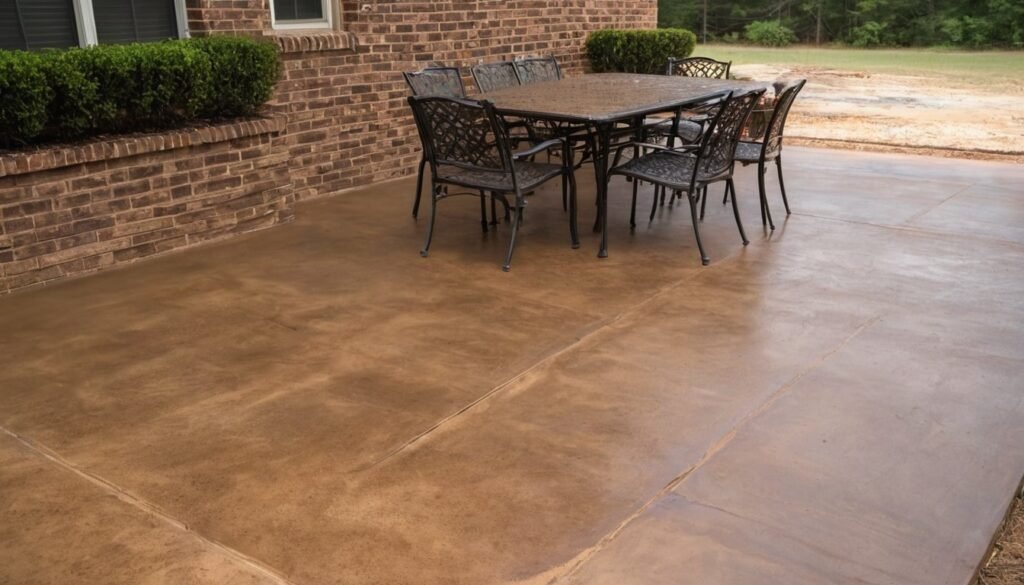
For stained concrete, we use stain first, which adds color that soaks in and shades like natural stone. Then we seal over it to lock in the color. We choose the sealer based on how the surface is used, the finish you want and how much sun it gets.
- Penetrating sealer for a natural look and good grip
- Acrylic sealer for color and a satin sheen
- Polyurethane for heavy wear and shop floors
- Concrete stain for earthy, mottled color
How we prepare and apply concrete sealer
The finish only lasts as long as the prep. We clean the slab well, remove stains and old sealer, repair small cracks and let the concrete dry fully. Sealing damp concrete traps moisture and turns the sealer cloudy, so we check the weather and the surface first.
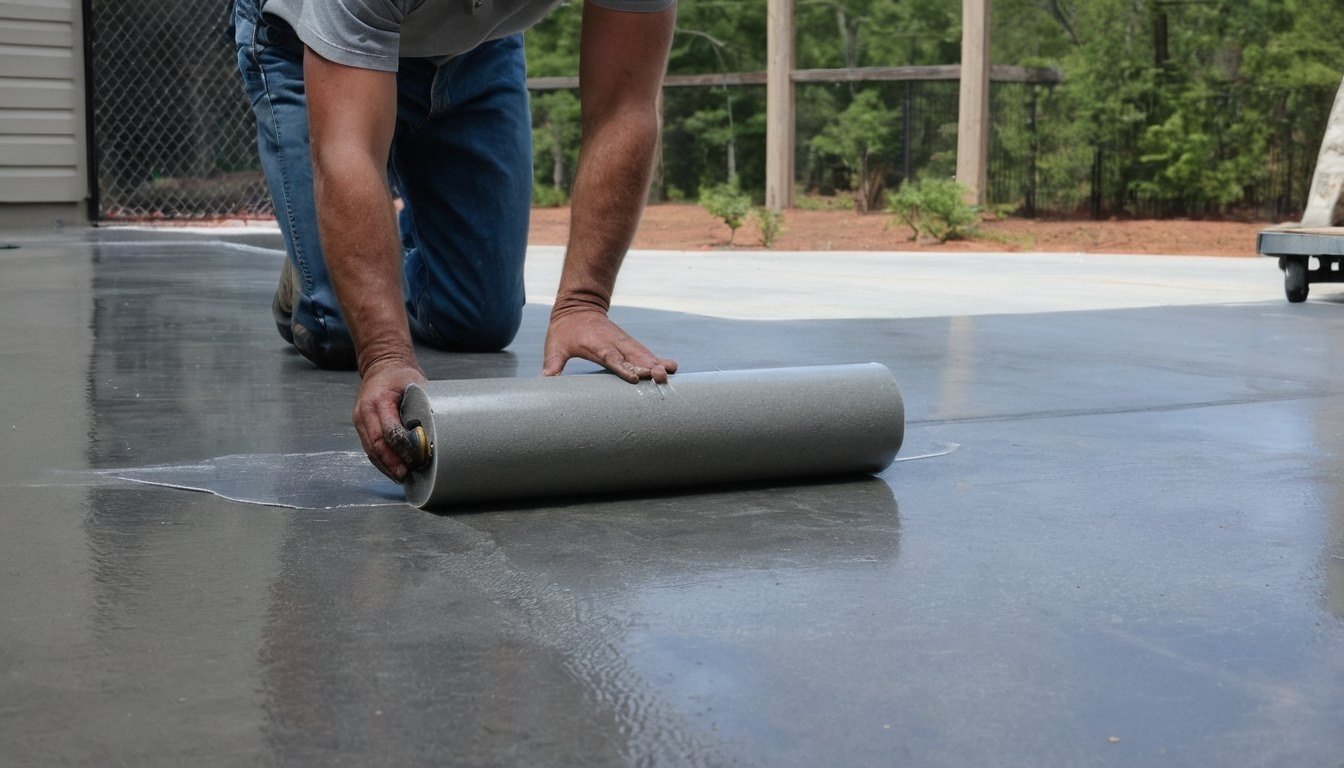
Then we apply the sealer in thin, even coats with a sprayer or roller. Thin coats cure clear and strong. Thick coats can bubble and peel. We keep the surface clear of foot traffic while it dries, and we tell you when it is safe to use again.
How often to reseal and what it costs
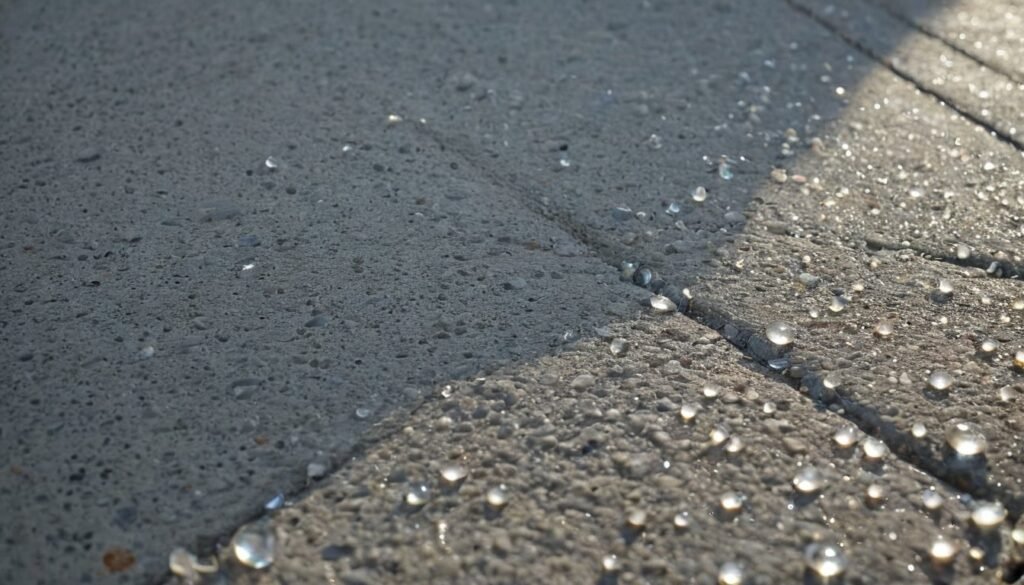
Most sealers last two to five years, depending on the sun, the traffic and the product. Driveways in full sun may need sealing sooner than a shaded patio. A simple water test helps. If water beads up, the seal is working. If it soaks in and darkens the concrete, it is time to reseal.
Cost depends on the size of the area, the type of sealer and the prep work needed. We give a free estimate after we see the slab. We also work with resurfacing and colored concrete projects, so ask us about a full refresh. Use the contact page when you are ready.
Concrete Sealing and Staining questions answered
How often should I seal my concrete driveway?
In Fayetteville, most driveways do best with a new coat of sealer every two to three years. If your driveway sits in full sun, or if you park vehicles that drip oil, you may need to reseal sooner. Shaded driveways and low traffic walks can often go three to five years. The type of sealer matters too. Acrylic sealers wear faster than polyurethane or penetrating sealers.
A simple test tells you when it is time. Sprinkle water on the surface. If it beads up, the sealer is still working. If it soaks in and darkens the concrete, the seal has worn down. Do not wait too long, because sealing worn concrete is easier than repairing stained, flaking concrete. We can check your driveway for free and tell you what it needs. If you are not sure when your concrete sealing was last done, just ask us. We can test the surface in a minute, and we will tell you plainly if concrete sealing can wait another season.
Will sealing make my concrete slippery?
It can if the wrong sealer is used. A thick glossy film on smooth concrete can get slick when it is wet. That is why we pick the sealer to fit the surface. For driveways, walks and pool decks, we use a penetrating sealer or a satin film sealer with a fine grit mixed in. That keeps the surface safe, even in a summer downpour.
Broom finish and exposed aggregate surfaces already have good grip, and a proper sealer will not take that away. If you are worried, tell us how the area is used. Steps, ramps and wet areas deserve extra care. We can test a small spot first and show you how it feels. Safety comes first, and a good looking surface is not worth a fall. Tell us about steps, ramps and wet areas at your estimate. Safe concrete sealing is about choosing the right product, and we are glad to test a small spot so you can feel the grip yourself.
What is the difference between sealing and staining concrete?
Staining adds color. Sealing adds protection. A stain soaks into the concrete and reacts with it, leaving earthy shades that can look like leather, stone or aged tile. Stain does not protect much by itself, so it is almost always followed by a sealer. Sealing alone does not change the color much, but it can darken or enrich what is already there.
Many people want both. We stain the slab to the color they pick, let it cure, and then seal it to lock in that color and protect the surface. If your concrete is already colored, you may only need a sealer. If it is gray and plain, a stain can turn it into a feature. We bring samples to your free estimate so you can see real colors on real concrete. Most customers find the best result comes from staining and concrete sealing in one visit, with the same crew, so the color and the protection are planned to work together.
Can you seal old concrete that has stains?
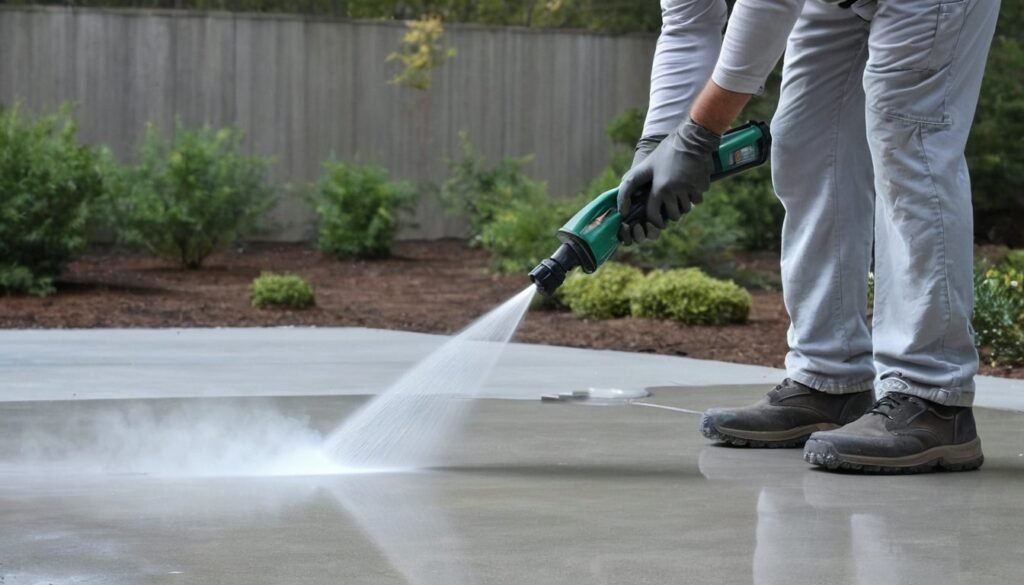
Yes, but we clean first. A sealer will lock in anything that is on the surface, so oil, rust, mildew and dirt need to be removed before sealing. We use cleaners made for concrete, a pressure washer on a safe setting and a stiff brush where needed. Some stains, like old oil, may need a poultice or a deeper treatment.
If stains do not come out, we can often hide them with a stain or a tinted sealer, which adds a layer of color. Cracks and chips get repaired first, so water does not sneak in. We tell you honestly what will improve and what might still show. In many cases, a cleaned and sealed slab looks years younger, and it is far easier to keep clean afterward. If a stain refuses to move, do not scrub harder or use strong acid. A short call to us can save your surface, and clean concrete sealing starts with a gentle, careful wash.
How long does concrete sealer take to dry?
Most sealers are dry to the touch in a few hours and ready for foot traffic in 24 hours. Cars should wait 48 to 72 hours, and sometimes longer with polyurethane or in cool or humid weather. Summer heat in Fayetteville helps sealers dry faster, but we avoid sealing in direct midday sun, because the surface can dry too fast and bubble.
We also watch the forecast. Rain on fresh sealer can leave white spots and cloudy patches, so we schedule sealing for a dry stretch. When the job is done, we tell you exactly when you can walk on it, when you can drive on it and when you can set furniture back. Keep pets and kids off until the surface is fully dry, and check for tracked dirt and leaves that might stick. Plan your concrete sealing for a stretch of dry days with mild temperatures, and we will help you watch the forecast so the finish dries clear and even.
Is it worth sealing concrete that is already colored or stamped?
Yes, and it may be even more important. Colored and stamped concrete have a surface that shows wear and fading. Sealing helps lock in the color, protects the texture and makes the surface easier to clean. Stamped patterns also have small grooves that collect dirt, and sealer makes it easier to rinse that away.
Without sealer, the sun slowly dulls the color, and water can darken or stain the surface. A good sealer also brings out the depth of color you paid for. We pick a sealer to match the surface, either a natural satin or a richer wet look. Then we plan a simple resealing schedule so the surface stays fresh. A little care every few years protects the whole investment. For colored or stamped work, concrete sealing is part of the care plan from the first day, and we leave a simple schedule so you know when to reseal.
Ready for a free estimate? Call (910) 356-9849 or use the estimate form. Concrete Kings of Fayetteville is locally owned and has 5 years of experience.