
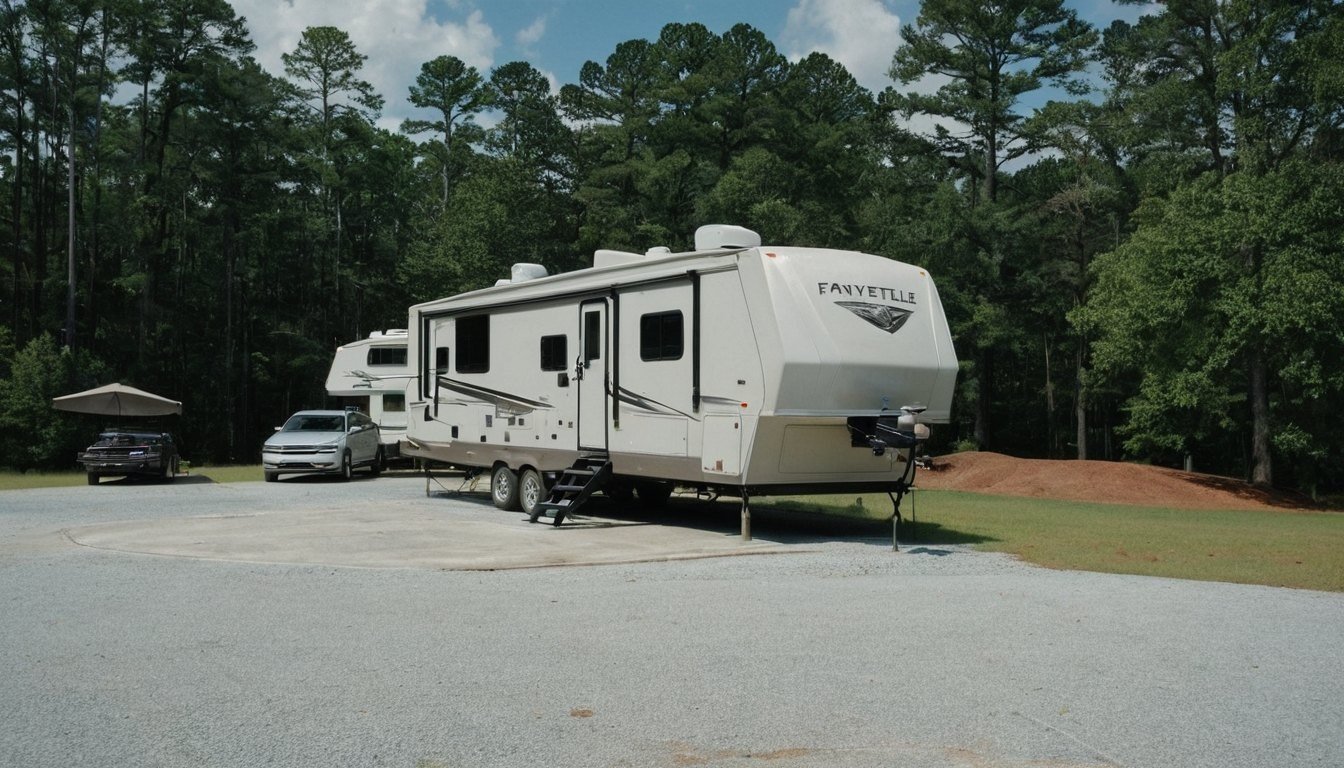
Your RV or boat is a big purchase, and it should not sit on grass, gravel or a cracked driveway. A solid RV pad keeps tires from sinking, keeps mud off your rig and gives you a clean place to wash, load and work. Fayetteville is military and outdoors country, and a lot of families here own campers and boats.
Concrete Kings builds RV pad concrete for homes and rural lots around Fayetteville. We are locally owned, we have 5 years of experience, and we give free estimates, with a plan that fits your rig and your lot.
What makes a good RV pad concrete slab
An RV is heavy, often more than ten tons for a big motorhome, and the weight rides on small tire patches. A thin driveway slab will crack. A good RV pad is thicker, has reinforcement and sits on a well packed base. We usually pour five to six inches, with steel rebar or heavy mesh.
Size matters too. Add a few feet beyond the length and width of your rig, so you have room to walk around, hook up and store gear. We also plan a gentle slope so rain runs off. A level pad with a slight pitch is best, because water that stands under tires can weaken the base.
- Five to six inch thickness for heavy rigs
- Steel rebar or heavy mesh for strength
- Packed crushed stone base for steady support
- A gentle slope to shed rain
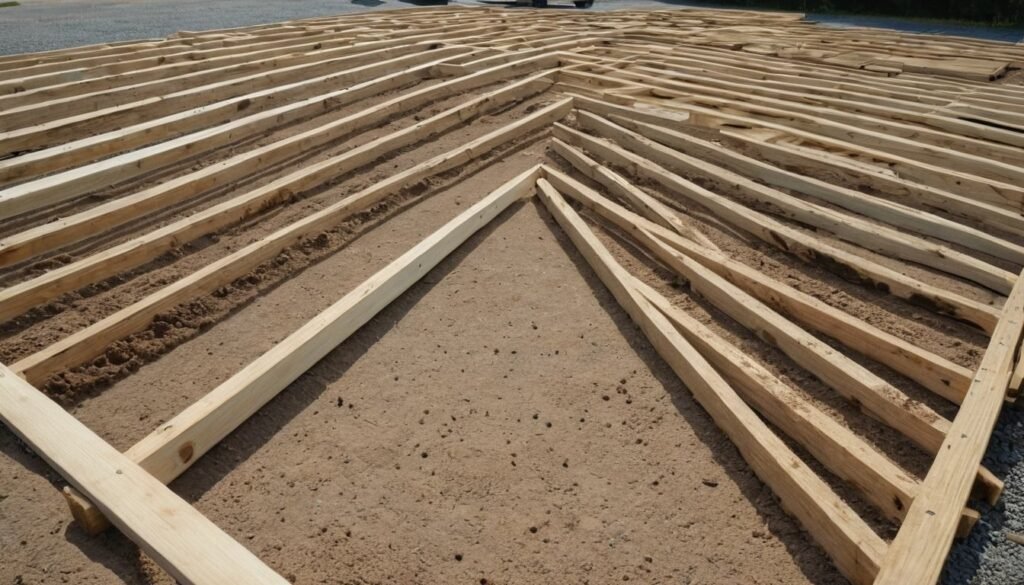
Planning your RV or boat pad on a Fayetteville lot
Think about how you will come in and go out. Long rigs need a wide turn and a smooth approach. We may suggest a widened apron or a short extension of your driveway so you do not damage the lawn. If your lot has a ditch or a culvert, we plan around it.
Power, water and sewer hookups are part of the plan if you want to live in the RV between trips. We can set sleeves or leave room for plumbers and electricians to add lines before we pour. That saves cutting the slab later.
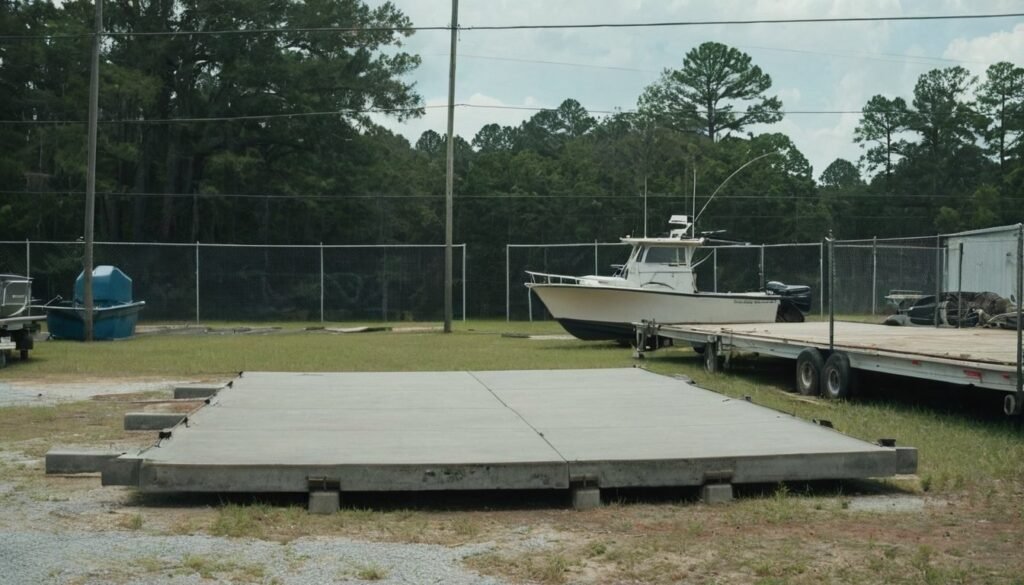
Boat pads and trailer parking
Boat trailers have narrow wheels that sink in soft ground, and the hitch weight can dent weak concrete. A boat pad needs the same strong base and thick slab. We often add a washdown area with a drain slope so you can rinse the boat after a day on the Cape Fear River or a lake trip.
Whatever you tow, tell us the weight and the number of axles. That helps us choose thickness and steel. We also finish the surface with a broom texture for grip when wet.
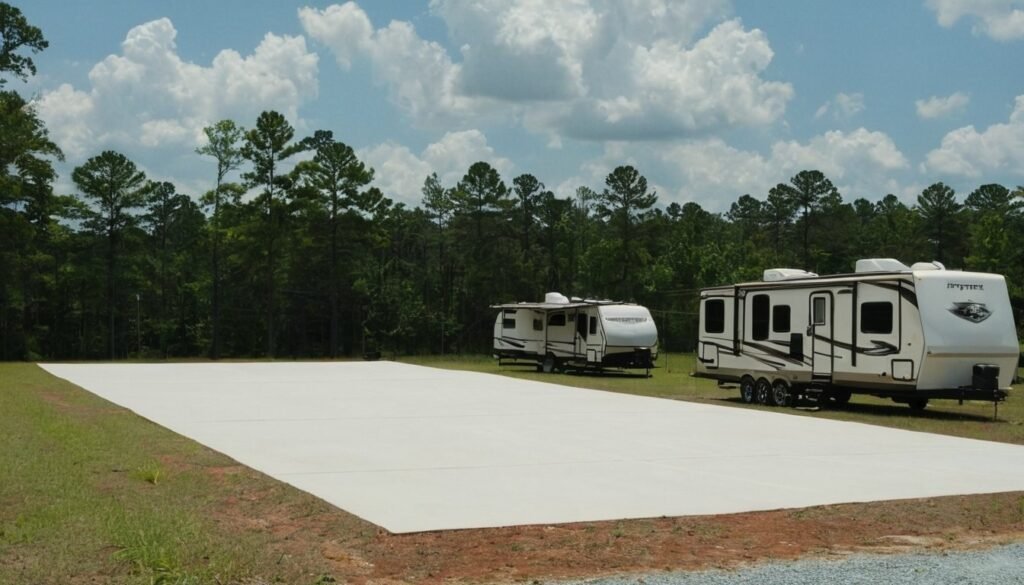
Cost, timing and next steps for RV pad concrete
Cost depends on the size of the pad, the thickness, the amount of steel and any extras like a washdown drain or hookup sleeves. Most pads take one to two days to pour, followed by a cure time. Plan to wait seven days before you park a light trailer and 28 days before you park a heavy motorhome.
We give a free estimate after we measure. If you have old concrete in the way, ask about concrete removal. When you are ready, reach out through the contact page.
RV and Boat Pad Concrete questions answered
How thick should an RV pad be?
For most RVs, trailers and campers, five inches is a good minimum, and six inches is better for large motorhomes and fifth wheels. A normal home driveway is four inches thick, and that is not enough for a heavy rig that parks in one spot for months. The weight of an RV sits on four to eight small tire patches, which puts a lot of stress on the concrete.
Thickness works together with the base and the steel. We add a layer of packed crushed stone under the slab and place rebar or heavy wire mesh inside. That spreads the load and keeps cracks tight. If your RV weighs more than average, tell us the weight and the number of axles. We use that to choose the right slab so the pad does not sink or crack under your rig. If you are not sure about your rig weight, check the sticker near the door or in the owner manual, and bring it to the estimate so the rv pad concrete is built strong enough.
How big should I make my RV pad?
Measure your RV from bumper to bumper, and add at least three to four feet on each side and at the front and back. A pad that is the exact size of the RV leaves you standing on dirt when you open the doors or hook up the utilities. Extra room also gives you a place for chairs, a grill, storage bins or a spare tire.
Think about slide outs and awnings, which stick out several feet beyond the body. Also, plan how the RV will back in. Tight turns can crush the edge of the concrete, so we may flare the entry or widen the apron. We can lay out the pad with marking paint so you can see it on your lot before we pour. It is easy to change the shape on paper and costly to change it in concrete. Walk your lot with us and talk about where the rig will sit. A well placed rv pad concrete slab keeps your rig level, easy to reach and away from low spots where water gathers.
Can I pour an RV pad over my existing driveway?
In most cases, no. Adding a thin new layer over an old driveway does not give the strength an RV pad needs. The old slab might also be cracked, uneven or too thin to carry the load. A new layer can crack along the same lines and break away from the old surface.
We can, though, pour a new RV pad next to your driveway and connect it with a wide apron. If your existing slab is thick and in good shape, we may use part of it as the approach to the pad. We check the thickness and condition before we decide. When the old concrete is weak, we suggest removing it and pouring a single new slab built for the load, so you only pay once. Before we pour any rv pad concrete over or beside old paving, we check the thickness and condition first, and we tell you honestly if starting fresh is the better value.
Do you pour pads for boats and utility trailers too?
Yes. Boat pads, utility trailer pads, lawn equipment pads and carports all work the same way. Heavy loads need a strong slab, and light loads can use a thinner one. We ask what will park there, how much it weighs, how often it moves, and how you will wash or work on it.
For boats, a slight slope and a drain area make washing easier, and a rough broom finish gives grip. For small trailers, we often use a five inch slab with a good base. If you plan to park a work truck, a skid steer or a tractor, we may increase thickness and steel. Many Fayetteville customers have both an RV and a boat, so we can design one big pad with sections for each, which saves money. We are happy to design a combined rv pad concrete layout for an RV, a boat and a small trailer, so each one has its own clear spot and a simple way in and out.
How long before I can park my RV on a new pad?
Wait at least seven days before you park a light trailer or small camper. Wait 28 days before you park a heavy motorhome, a large fifth wheel or a loaded trailer. Concrete gains most of its strength over four weeks, and a heavy load too soon can crack the slab or leave marks in the surface.
Weather affects the cure. Hot, dry days speed it up, while cool or wet weather slows it. We tell you the exact date when we finish the pour. If you need to bring your rig home before then, we can talk about a smaller plan, such as pouring in two stages. Patience pays off here. A pad that is allowed to cure fully will carry your RV for decades without trouble. Keep this timeline in mind when you plan trips. Finishing the rv pad concrete before your first big outing gives the slab time to cure, so you can park without worry.
Do RV pads need drainage planning?
Yes, and it is one of the most important parts of the plan. Water that runs under a pad can wash out the soil and leave hollow spots. Water that stands on top can freeze and thaw, stain the surface, and make it slippery. We slope the pad about one quarter inch per foot, so rain runs off toward a safe spot, away from your house and your neighbor.
Fayetteville gets heavy summer storms, and tropical systems can drop several inches of rain in a day. We look at where the water goes on your lot. A small swale, a drain pipe or a gravel edge can help. If your RV has a water hookup, we also plan where wash water will go, so it does not flood the area around the pad. Good drainage protects your investment, and we will walk the lot with you so the rv pad concrete sheds water the right way after every storm.
Ready for a free estimate? Call (910) 356-9849 or use the estimate form. Concrete Kings of Fayetteville is locally owned and has 5 years of experience.