
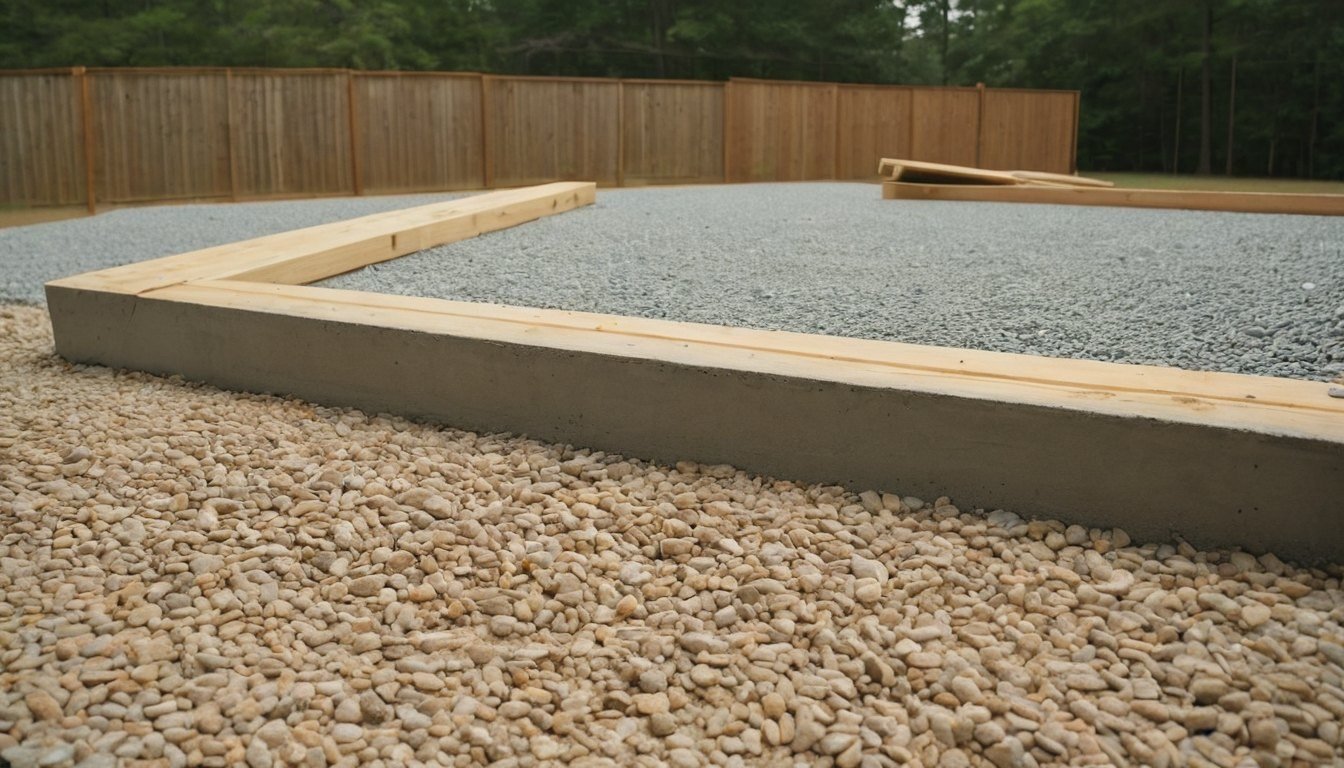
A shed set on dirt or loose blocks starts to lean, sag and rot long before its time. Doors stick. Floors soften. Critters move in underneath. A shed slab concrete pad fixes all of that, because it gives the building a flat, dry, rock solid place to sit.
Concrete Kings pours shed slab concrete for backyard sheds, workshops, storage buildings and small garages around Fayetteville. We are locally owned with 5 years of experience, and we give free estimates for every shed slab concrete job.
Why shed slab concrete beats blocks and gravel
Wood floors sitting on soil or blocks soak up moisture. In Fayetteville, humid summers and heavy rain make that worse. A shed slab concrete pad lifts the building off the wet ground and keeps the floor dry. It also stops the building from settling unevenly, which is what makes doors bind and walls twist.
A slab is also tougher than gravel. You can park a lawn mower, a workbench or a motorcycle on it. If you ever plan to wire it for power or run a small workshop, a flat concrete floor makes everything easier.
- Keeps the floor dry and off damp soil
- Stops sagging and sticking doors
- Blocks mice, snakes and termites from easy entry
- Handles heavy tools, mowers and bikes
How we build a shed slab concrete pad
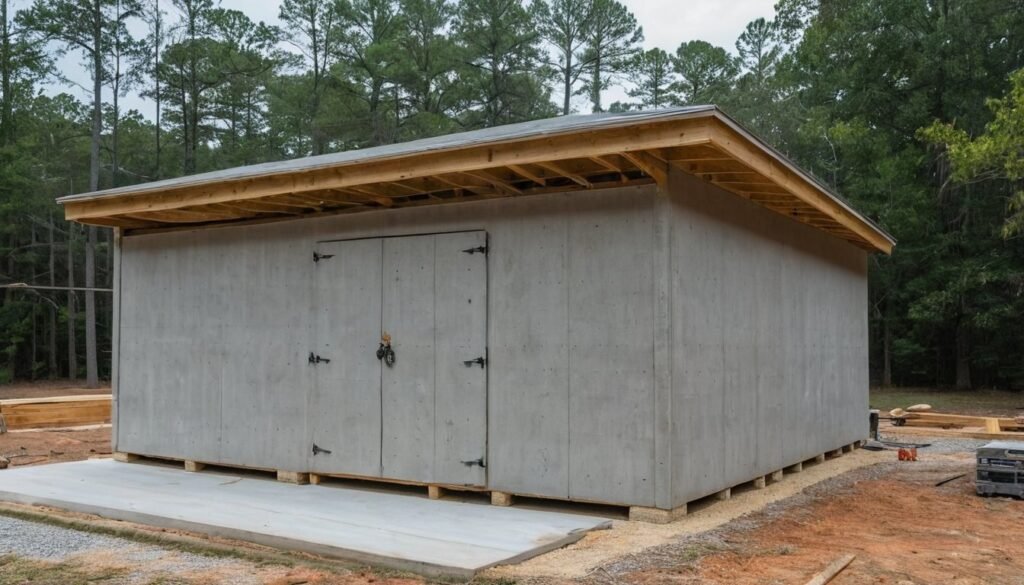
We start with the size of your shed and add a few inches on each side so rain drips past the walls. We mark the spot, clear and level the ground, and pack a crushed stone base. Then we set wooden forms and add steel rebar or mesh.
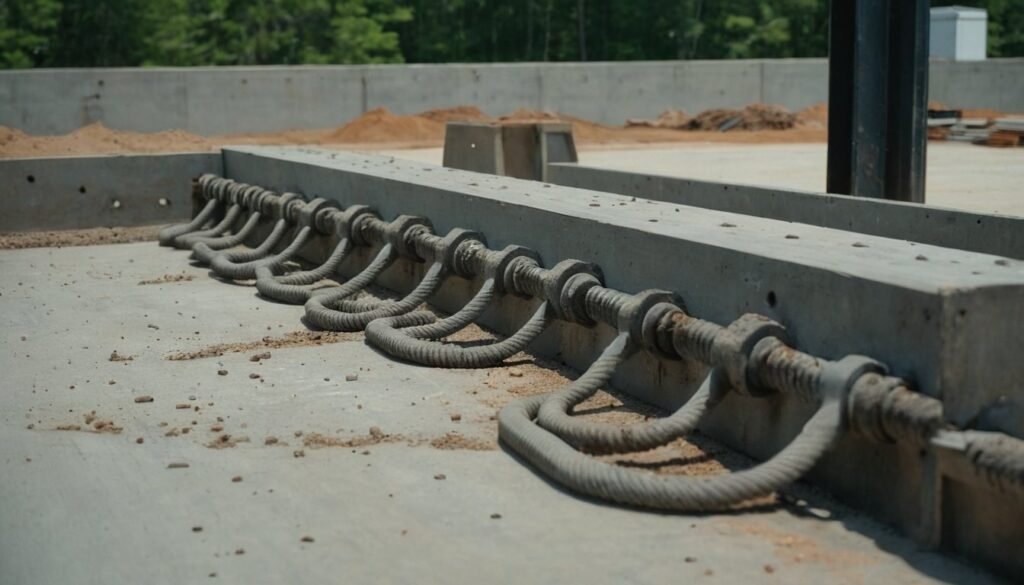
The concrete is poured, leveled and finished with a broom texture for grip. If your shed has a wood frame, we can set anchor bolts into the edge while the concrete is wet, so you can bolt the building down against storms. Most shed slab concrete pads are four inches thick, and we go thicker for a workshop with heavy equipment.
- Pad sized a little larger than the building
- Packed stone base and steel reinforcement
- Anchor bolts set into the edge when you want them
- Broom finish and a slight slope for runoff
Choosing the right size and spot for your slab
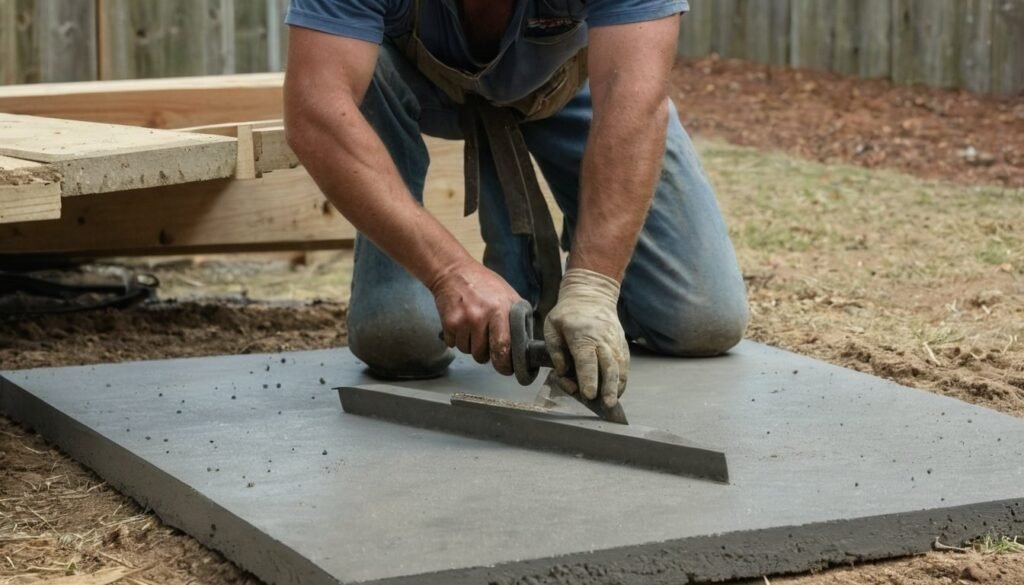
Common shed sizes are eight by ten, ten by twelve and twelve by sixteen, but many homeowners build bigger. Pick the size of the building first, because the slab should fit it. Check your property lines, easements and any setback rules from the city or county before you choose a spot.
Think about water. Sandy Fayetteville soil drains well, but a shed set in a low spot still floods in a big storm. We prefer a spot that is a little high, or we build the slab up a few inches. A short walkway to the shed door is easy to add at the same time.
Cost and timing for a shed slab concrete pad
A small shed slab concrete pad can be poured in one day, and the concrete needs about seven days before you set the shed on it. Cost depends on size, thickness, how hard it is to reach and whether you want a thicker slab for a workshop. We give you a free estimate once we see the spot.
Pairing the shed with a stoop or a short walk makes it easier to use. If you also need a pad for a generator, we can pour both on the same trip. Ask for details on the contact page.
Shed Slab Concrete questions answered
How thick should a shed slab concrete pad be?
For a typical backyard shed, four inches is the standard thickness. That handles the weight of the building, a few shelves and a lawn mower with ease. If you plan to store heavy equipment, like a tractor, a welder or a vehicle, we pour five or six inches and add more steel. Thickness is only part of the picture.
The base under the slab matters just as much. We pack a few inches of crushed stone so the soil does not wash out and leave the slab hollow. We also add rebar or mesh to keep any cracks tight. The edges of the slab can be made thicker, like a built in foot, to support the walls. If you tell us what you plan to put in the shed, we choose the right thickness so your shed slab concrete pad stays flat for decades. If you are unsure about the weight of what you will store, ask us. We will help you pick a thickness that fits, so your shed slab concrete pad does not sink or crack.
Can I put my shed on a slab that is only slightly bigger than the shed?
Yes, and that is the right way to do it. We usually size the slab so it sticks out about two to four inches beyond the shed walls. That lets rain run off the edge instead of seeping under the wall. If the slab is exactly the same size or smaller, water can run down the wall and into the floor.
If you want extra room for a ramp, a doorstep or a small work area, we can extend the shed slab concrete pad in front of the door. Just tell us about your plan before we pour. Changes after the pour are costly, and they never look as clean. We help you measure the shed, mark the spot and think through the door swing and the path to the house so everything lines up. Measure twice, then call us. A short visit to walk the spot with a tape saves time and keeps the slab, the shed and the door swing all lined up.
Do I need a permit for a shed slab in Fayetteville?
Rules depend on the size of the shed and where you live. Many places allow small sheds without a permit, but larger sheds, buildings with electricity or buildings near property lines can need approval. The city of Fayetteville, Cumberland County and the other towns we serve each have their own rules, and subdivisions often add more through an HOA.
We suggest checking before we pour. A quick call to your local planning or inspections office can tell you what applies. We also call 811 before digging so buried lines are marked. If your shed is a kit or a built building, the maker may have instructions for the slab. We can read them with you and build the shed slab concrete pad to match. It is easier to get this right at the start. A short call to the planning office is free, and it is far cheaper than moving a slab. Keep any approval in your records for the day you sell the home.
How long before I can put my shed on the new slab?
Wait about seven days before you set a shed on a new slab, and give it up to 28 days before you load it with heavy equipment. The concrete reaches most of its strength in the first week, but it keeps getting stronger for a month. Putting a big, heavy building on it too soon can chip the edges or crack the slab.
If the shed will be delivered or built by another company, tell us the date so we can plan the pour. We can schedule the slab a week or two before they arrive. Hot, dry weather speeds the cure a bit, and cool or damp weather slows it. We always tell you the safe day when we finish the job. If you are in a hurry, ask us, and we will talk about options that keep the slab strong. Tell us the date your shed will arrive, and we will plan the pour so the slab has plenty of time to cure and is ready when the shed shows up.
Can you add anchor bolts so my shed does not blow away?
Yes. Hurricane season and strong summer storms can shift a light shed, so many customers want to anchor the building. We can set J bolts or other anchors into the edge of the concrete while it is wet, spaced to match your shed frame. That locks the walls to the slab.
We need the shed plans or a kit layout to place the bolts in the right spot. If you are unsure, we can drill and set wedge anchors after the slab has cured. Either way, the bolts should be tight and the sill plate should be pressure treated wood, so it does not rot. A shed slab concrete pad with proper anchors holds up to wind and gives you peace of mind during storm season in eastern North Carolina. Use treated wood for the bottom plate, and ask the shed maker about the anchor spacing. We will match our work to those instructions.
Is it cheaper to pour a shed slab concrete pad or build a wood foundation?
A wood foundation can be cheaper at the start, but it does not last as long. Wood sits on or near the ground, soaks up moisture and gets attacked by termites and rot. Many wood bases need repairs or replacement within ten years. A shed slab concrete pad costs more now, but it usually lasts for decades.
A slab also gives you a better floor. It is flat, stable and easy to sweep, and it can hold heavy tools. For a workshop, a garage or a shed that stores anything valuable, concrete is the smarter long term choice. If your budget is tight, ask us about a smaller slab or a simple thickened edge design. We give a free estimate, and we explain the price of each option, so you can pick what suits you. If you are still deciding, ask us to write both options on one estimate so you can compare the price today and the cost of repairs ten years from now.
Ready for a free estimate? Call (910) 356-9849 or use the estimate form. Concrete Kings of Fayetteville is locally owned and has 5 years of experience.